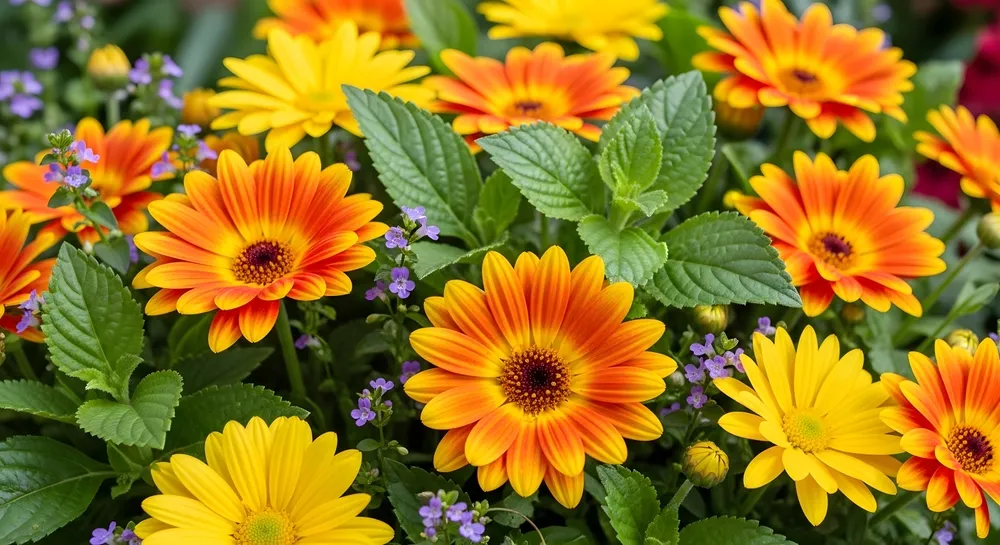
Gladioli have that elegant air that immediately catches the eye. They grow tall, with flowers arranged on a vertical spike, and look impeccable both in the garden and in a vase placed on the living room table. If you want a yard that stands out in the summer or you like to cut fresh flowers for your home, gladioli are worth a spot on your list.
I'll explain, step by step, how to plant them, how to care for them, and how to propagate them. You'll find clear, easy-to-apply tips, without complicated jargon. And if at any point you feel like you want a ready-made bouquet, you already know where to find us – at Florăria Bujor, a flower shop in Iași known for bouquets of flowers in Iași made with attention to detail.
Gladioli are planted in the spring, after the soil reaches a minimum of 8–10°C. In most areas of Romania, the suitable period is April–May. If you want to enjoy flowers for a longer period, plant the bulbs in series, 2–3 weeks apart. This way, you will have blooms from July until almost autumn.
Choose a sunny spot with at least 6 hours of light per day. Gladioli grow tall, with some varieties reaching 120–150 cm, and light helps them form strong stems and abundant flowers. Avoid areas with strong winds or prepare support stakes in advance.
The soil must be loose and well-drained. If you have clay soil, mix in sand and mature compost. Stagnant water affects the bulbs, and in most cases, rot occurs due to poor drainage, not lack of fertilization.
Plant the bulbs at a depth of 10–15 cm, about three times their height. Keep 10–20 cm between them. If you want a compact effect, you can reduce the spacing slightly, but don't crowd the bulbs too much. The roots need space.
After planting, gladioli are not too demanding, but they do require a few consistent actions.
Water regularly, especially during the growth and budding period. Keep the soil moist, not waterlogged. Water at the base, directly onto the soil, to avoid spots on the leaves. If you notice the leaves losing their firmness, check the drainage first, then the watering frequency.
Apply a fertilizer for flowering plants every 2–3 weeks. A product with potassium supports flower formation and color intensity. For regular use, well-rotted compost provides stable results and improves soil structure.
Install stakes for the tall varieties. Attach them discreetly and tie the stem with a soft ribbon. Don't tie too tightly. You want support, not pressure.
Weed the plants and gently loosen the soil around them. The roots will breathe better, and water will reach them evenly.
Gladioli bloom 70–100 days after planting, depending on the variety. Each spike lasts about 2–3 weeks. If you planted them at staggered intervals, you'll have fresh flowers all summer long.
Cut flowers for the vase when the first 1-2 flowers at the base have opened. Use a clean knife and leave as many leaves on the plant as possible. The leaves feed the bulb for the next season.
In the vase, cut the stems at a 45-degree angle and remove about 1 cm from the stem every two days. Change the water daily and wash the vase with chlorine-based solutions to prevent bacterial growth. This is a rule we also recommend for any bouquet in the category of bouquets of flowers. A clean vase extends the life of flowers by several good days.
After the spike has withered, remove only the floral part. Keep the leaves until they turn yellow naturally. During this time, gradually reduce watering.
Gladioli do not survive winter in the soil, especially in areas with heavy frost. 4-6 weeks after flowering, when the leaves turn yellow, dig up the bulbs.
Use a garden fork and work carefully. Shake off the soil, cut the stem to 2-5 cm, and let the bulbs dry for 2-3 weeks in a ventilated space. Do not expose them to direct sunlight.
After drying, separate the old, shriveled bulbs and keep the healthy ones. Store them in cardboard boxes or paper bags at 4–8°C. Check periodically and remove any affected bulbs.
Small bulbs appear around the main bulb. These represent the simplest method of propagation.
In autumn, separate the bulbs and store them the same way as the larger ones. In spring, plant them 3–5 cm deep in a dedicated row. Care for them identically, but be patient. In most cases, they will bloom after 1–2 years, when they reach the right size.
If you have a favorite variety with a specific color or shape, this method helps you propagate it without high costs.

Don't have a garden? No problem. Gladioli grow very well in deep pots, at least 30 cm deep.
Place a drainage layer at the base—gravel or expanded clay—then fill with fertile soil. Plant the bulbs closer together for a rich effect. On the balcony, watering becomes more important because the soil dries out faster.
If you like to combine gladioli with other decorative plants, you can also integrate varieties from the category of pot plants. A well-thought-out green corner completely changes the atmosphere of an apartment.
Do gladioli lean? Check the planting depth and install stakes. Strong winds can break stems if they are not supported.
Are the leaves spotted or turning yellow prematurely? Reduce tillage and improve drainage. Soil hygiene and crop rotation help prevent diseases.
Are no flowers blooming? Choose medium or large bulbs and ensure sufficient light. Lack of sun affects bud formation.
Gladiolas provide verticality and structure in an arrangement. We often use them in flower arrangements for summer events or in bouquets given on an anniversary.
If in spring you prefer tulips – you’ll find inspiration in the collection of tulip bouquets - gladioli are a good choice for an elegant and clean effect.
At Bujor Flower Shop, each bouquet is personalized. The florists ask you what the person receiving it is like: energetic, discreet, sophisticated? Depending on your answer, we choose the colors, the texture of the packaging, and the shape of the arrangement. Our packaging is easily recognizable in Iași, and clients often tell us that the difference is visible from the very first second.
We create flower bouquets in Iași for any occasion, wedding bouquets, civil ceremony bouquets, ceremony candles, boutonnières, corsages, as well as funeral wreaths, funeral sheaves, and funeral bouquets. For weddings, we advise scheduling a consultation 2-3 months in advance. We can create the other products on the spot, depending on complexity.
Delivery is free for orders over 400 lei in Iași, and outside the city, we calculate the cost based on kilometers. We confirm by phone with the recipient before delivery to avoid unpleasant surprises. If a flower is out of stock, we will notify you and maintain the chosen color scheme and style.
We have bouquets starting from 100–150 lei, and the average order is 300–350 lei. For those who want to make a serious impression, we create arrangements that go up to 3,000–4,000 lei. The flowers are fresh, brought directly from farms, and typically last 7–10 days, with a guarantee if problems arise.
You can order online through the online flower shop or you can visit us at our location in Iași, where we also operate as a bistro. Many customers come in for a coffee and leave with a bouquet. It happens often.
Choose gladioli for your garden or let us transform them into a memorable bouquet. Visit our website, call us for personalization, or come to our flower shop. Order now and surprise someone dear in Iași. We'll take care of the rest.
Gladiolus bulbs are planted in the spring, usually between April and May, after the soil temperature reaches approximately 8–10°C. To have flowers for a longer period, you can plant them in batches at intervals of 2–3 weeks.
Gladioli need regular watering, especially during the growth and bud formation period. The soil should be kept lightly moist but not waterlogged. It is recommended to water the plants at the base of the stem to avoid spots on the leaves.
Generally, gladioli bloom approximately 70–100 days after planting, depending on the variety and light and temperature conditions. If you plant the bulbs in succession, you can enjoy flowers throughout the summer.
Yes, gladioli can also be grown in deep pots, at least 30 cm deep. It's important to use a pot with good drainage and a fertile soil mix. The plants should be placed in a bright location where they receive at least 6 hours of sun per day.
Gladioli are most easily propagated by the corms that grow around the main bulb. These are separated in the fall and planted in the spring at a shallower depth. Usually, the corms will flower after 1–2 years when they reach the appropriate size.